OHDSI Germany - National Node
Local Collaboration. European Impact.
Founded in Spring 2021, OHDSI Germany is part of the global OHDSI community and the OHDSI Europe National Nodes network. It brings together clinicians, researchers, informaticians, and partner organisations across Germany who work with the OMOP Common Data Model and OHDSI methods.The node provides a national platform for exchange on OMOP implementation, study methods, tooling, and real-world evidence generation. It helps German partners connect national research infrastructures with international OHDSI collaborations and supports participation in multicentre observational studies.In the German context, OHDSI Germany plays an important bridging role between hospital-based data integration, national initiatives such as Medical Informatics Initiative (MII) and Network University Medicine (NUM), and European developments including the EHDS and OHDSI Europe.
Community Snapshot
~ 80
community members
~ 8
data partners
Monthly
community calls
2+
in-person meet-ups / year
Objectives
- Support sustainable OMOP adoption across German hospitals, research groups, and partner organisations
- Align German data models, ETL processes, and vocabularies with European and global OHDSI standards
- Grow a national learning community that shares implementation experience, study methods, code, mappings, and lessons learned
- Provide an accessible entry point for newcomers through regular community calls, workshops, and peer exchange
- Increase German participation in national and international observational studies with clinically relevant research questions.
- Strengthen connections between OHDSI Germany and national initiatives that pursue internationalisation through OMOP and OHDSI
Gallery


Focus areas
Working groups
- OHDSI Germany monthly community call - coordinated by the node lead team - every second Thursday of the month, 14:00-15:00 CET, online
- Community exchange formats and ad hoc thematic sessions - organised around current study, tooling, and implementation topics as needed
International projects & collaborations
- FALCON-Lung / iCAN Network study - contribution to a multinational observational research effort and stronger German participation in international studies
- National and European collaborations across OHDSI, MII, NUM, and semantic interoperability initiatives - connecting German infrastructure work with international methods and networks
Notable achievements
- First German Study-a-thon in November 2024
- First German University hospitel became DARWIN partner in 2026
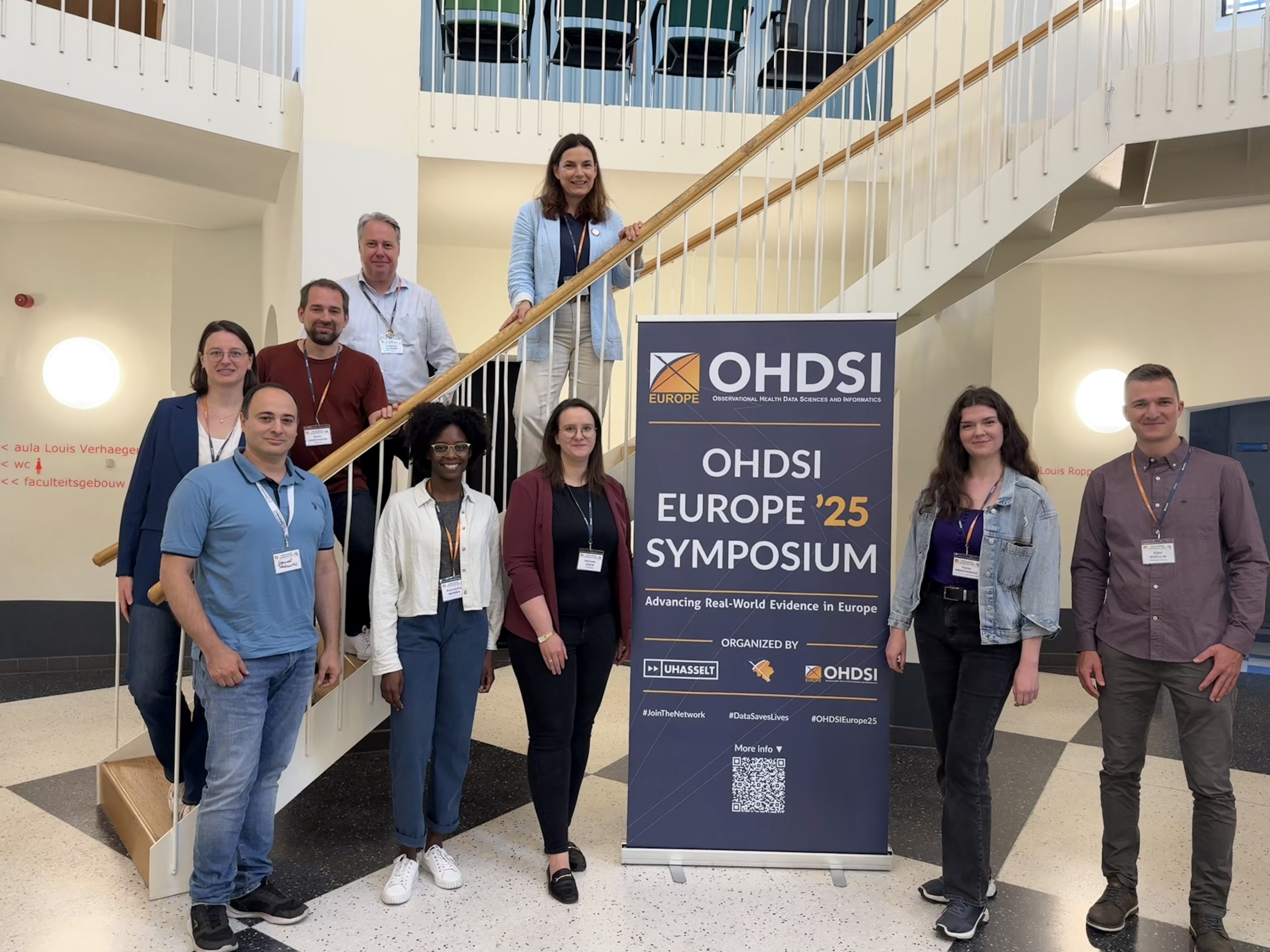
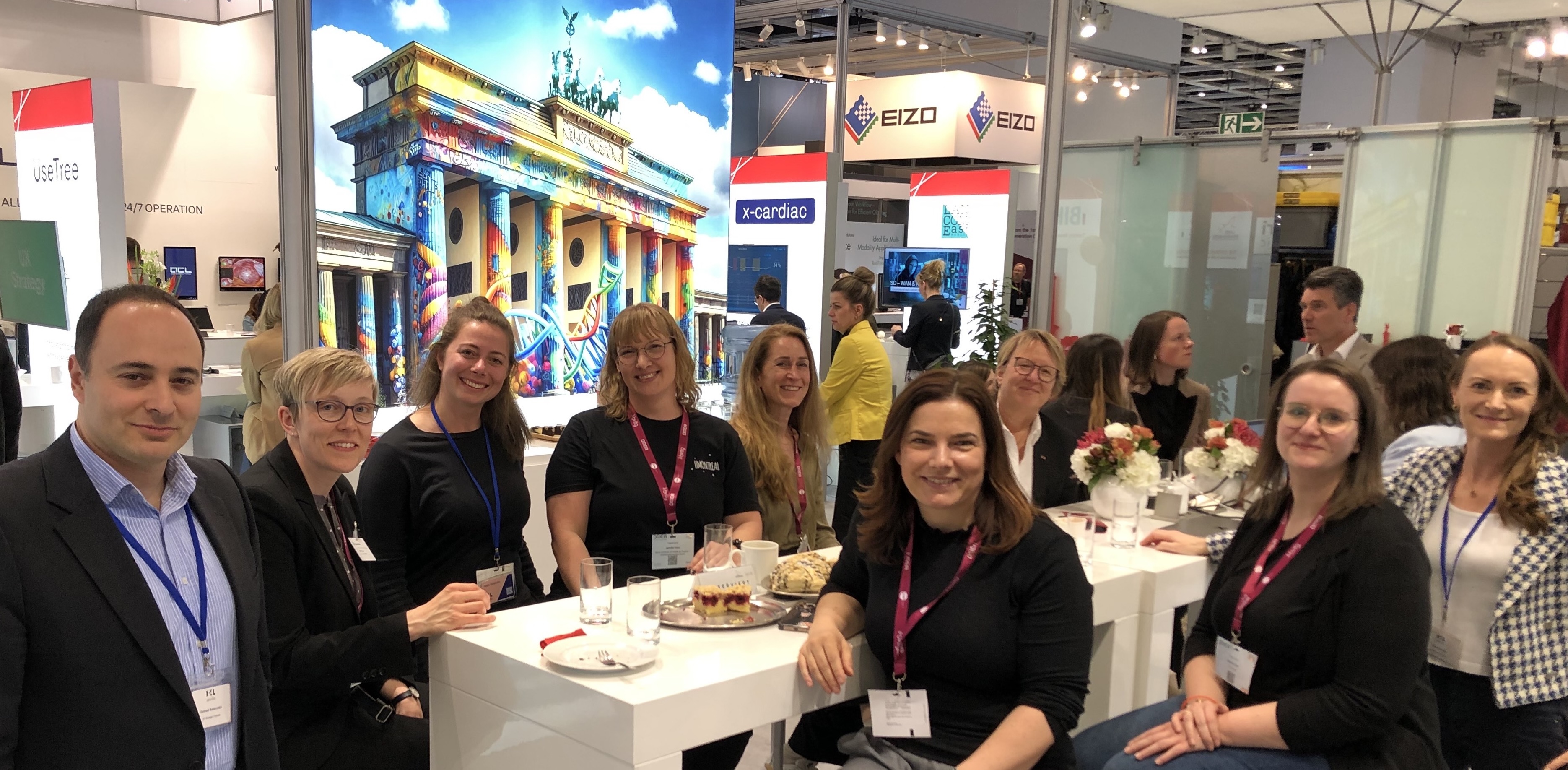
- In-person community meet-ups at DMEA 2025 and 2026
- GMDS 2025 workshop on study design best practices
- Medical Informatics 2025 Symposium: presentation on participation in the EHDEN MegaStudy on drug shortages
- Data4Life talk on rare diseases
- Co-creation workshop in Ghent (EU project AIDAVA) on semantic interoperability, highlighting OMOP as one of the key standards for healthcare research
- Active preparation and development of node-led observational studies, including rare diseases with a focus on Klinefelter syndrome
- Network University Medicine – Data Integration Centres (NUM-DIZ): in the current funding phase, international alignment is a dedicated focus area. Within one work package, 22 sites committed to translating and providing their DIC data in OMOP format as a basis for conducting a joint study
- New funded project: NUM^OHDSI Connect: Internationalization of Medical Research
Other focus areas
- Activating the national community and increasing international participation
- Data quality assessment and improvement for OMOP-transformed German health data
- Hospital data integration, observational research readiness, and cross-site study participation
- Rare diseases, intensive care, and other clinically relevant use cases for international collaboration
- Semantic interoperability, mapping support, and practical alignment with emerging EHDS requirements
How to join OHDSI Germany?
Governance
- Lead Institutions:
University Hospital Carl Gustav Carus Dresden / TU Dresden
Medical University Lausitz – Carl Thiem Cottbus
D4L data4life gGmbH Potdsam - Leadership Team
Ines Reinecke -This email address is being protected from spambots. You need JavaScript enabled to view it.
Michele Zoch -This email address is being protected from spambots. You need JavaScript enabled to view it.
Ben Illigens –This email address is being protected from spambots. You need JavaScript enabled to view it. - OHDSI Germany follows a lightweight, community-oriented governance model with an expanded lead team. The node is coordinated through open monthly exchange and collaboration across academic, clinical, and infrastructure partners, with close alignment to OHDSI Europe and growing collaboration with Data4Life.
- Join the OHDSI Community and select the Europe chapter: https://www.ohdsi.org/community/
- Request an invitation to the OHDSI Germany monthly call via the Google Form listed on the OHDSI Europe Germany page
- Or contact the node leads directly via the contacts listed on the OHDSI Europe Germany page
- Participate in open national events
Join the OHDSI Community and select the Europe chapter:
www.ohdsi.org/community/Contact the node coordinators to join the local activities.
Activities
Useful resources
- OHDSI Germany annual summary 2025 - internal node report submitted to OHDSI Europe
- Network University Medicine Webpage: https://www.netzwerk-universitaetsmedizin.de/en
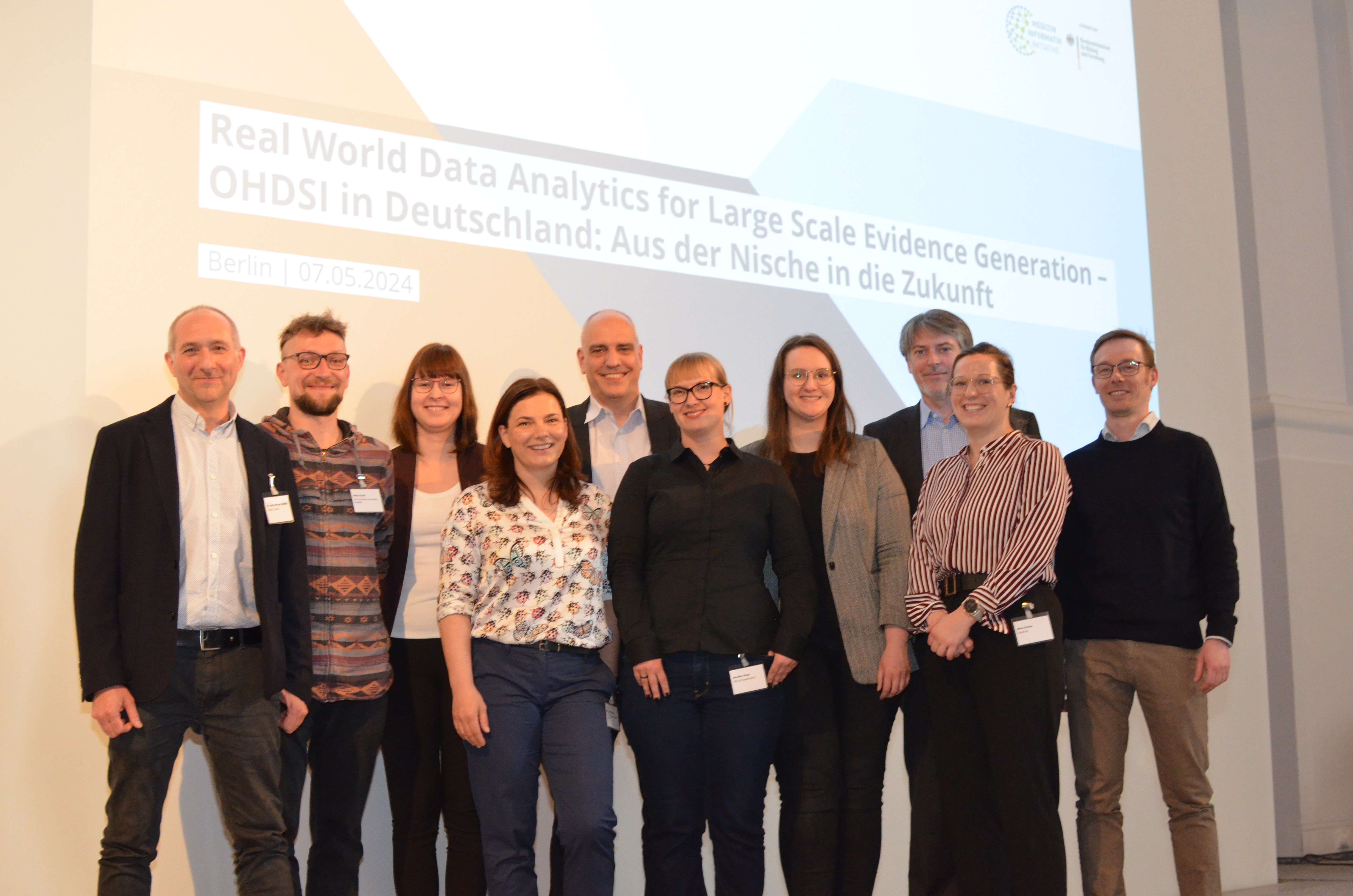
- OHDSI TMF Workshop: https://www.tmf-ev.de/veranstaltungen/real-world-data-analytics-large-scale-evidence-generation-ohdsi
- GitRepository ETL Job, FHIR (German Core Data Set) to OMOP: https://github.com/OHDSI/ETL-German-FHIR-Core
- German Techstack (OMOP, ATLAS, Achilles, DQD) https://gitlab.ukdd.de/pub/ohdsi/techstack
Upcoming events
- OHDSI Germany monthly community call - every second Thursday of the month - online
- OHDSI Europe Symposium 2026 - 18-20 April 2026 - in-person - Rotterdam, The Netherlands
- MIRACUM difuture Symposium. 30 June – 01 July 2026 – in person - Mannheim – Session on “Germany in the OHDSI Community: International Studies, Initial Findings, and Experiences.”
Contributing organizations (selected)
The Germany Node includes contributions from academic, clinical, and infrastructure partners across the health data landscape. The selection below highlights core organisations that visibly support node activities; the final logo selection can be updated after partner confirmation.







This is not an exhaustive list and will evolve as the community grows.
Connect with the national node and follow upcoming activities.